


Unlocking the Secret of Manuka Honey Colors: Why Does Every Batch Look Different?


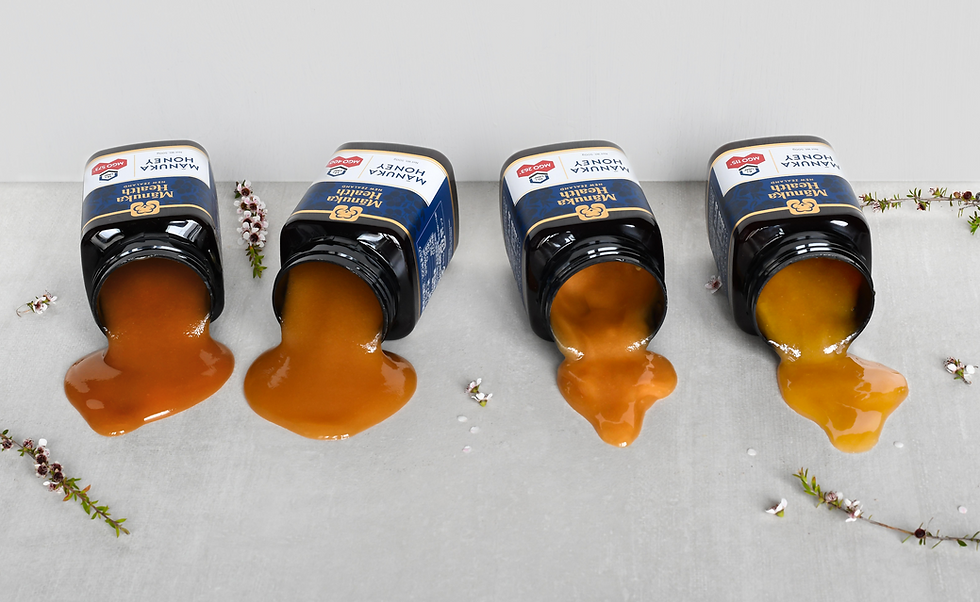
For those who enjoy or frequently purchase Manuka honey, you have likely noticed a fascinating detail: the color of Manuka honey across different jars or production batches can vary significantly. Some batches may feature a bright, light golden-amber hue, while others showcase a much deeper caramel or dark amber tone—even though they are 100% pure, natural honey from the same brand.
This phenomenon is neither a defect nor a sign of adulteration. Instead, a fascinating and complex scientific explanation lies behind it. This article explores scientific research to uncover why Manuka honey colors vary from batch to batch and what those shades reveal to us.
The Chemistry: What Determines Manuka Honey's Color?
In food chemistry, honey's color does not stem from a single pigment. Rather, it results from complex interactions among multiple organic compounds. Manuka honey features unique biochemical components that make its color profile distinct:
Phenolic Compounds and Flavonoids: Antioxidants foraged by worker bees from the nectar of the Manuka tree (Leptospermum scoparium), contributing natural yellow-amber to brown tones.
Dihydroxyacetone (DHA): A naturally occurring precursor found in high concentrations within Manuka flower nectar.
Methylglyoxal (MGO): The primary active marker responsible for Manuka honey’s signature antibacterial properties.
The Maillard Reaction: Over time, reducing sugars naturally present in honey react with amino acids (proteins), forming natural pigment compounds called melanoidins that progressively darken the honey as it ages and is stored.
Key Factors Behind Batch-to-Batch Color Variations
Agricultural and food science research highlights several overlapping variables that cause color discrepancies across production batches:
Geographical Origin and Plant Strains
Manuka trees spanning diverse regions of New Zealand and Australia exhibit subtle variations in soil composition, local climates, and plant genetics. Research shows that DHA concentrations in nectar vary by region, establishing different baseline chemical profiles for each harvest.
Seasonal and Weather Fluctuations
Rainfall and sunlight levels during the flowering season directly dictate nectar concentration.
Early-Harvest Batches: Honey harvested earlier in the season often appears lighter because frequent rainfall can slightly dilute the nectar.
Late-Harvest Batches: Drier weather and intense sunlight reduce water content in the nectar, concentrating the active compounds and yielding a significantly darker honey.
Post-Harvest Biochemical Maturation
Manuka honey remains chemically active even after bottling, as internal chemical processes continue:
DHA gradually converts into MGO over time.
Storage temperatures accelerate this conversion rate. Higher temperatures or extended storage stimulate the Maillard reaction, causing the honey to shift from light gold to deep amber or dark brown as it matures.
Does Darker Honey Mean Better Quality?
A widespread consumer misconception is that "darker Manuka honey automatically indicates superior quality or higher MGO levels." Scientifically, however, the reality is more nuanced:
Research Insight: While older Manuka honey generally features a darker color and higher MGO due to the breakdown of DHA, you cannot accurately determine MGO levels or overall quality purely by visual inspection.
Scientists rely on the Pfund Scale (measured in millimeters, mm) to classify honey colors ranging from Extra Light Amber to Dark Amber. Every batch requires laboratory testing via advanced instrumentation, such as HPLC (High-Performance Liquid Chromatography), to precisely quantify MGO, DHA, and Leptosperin levels. Consequently, two jars with different shades can share identical or very similar MGO potency depending on their raw environmental origins and storage history.
What Should We Do as Consumers?
The natural color variance across Manuka honey batches serves as "ultimate proof of a 100% raw, natural product." Synthetic alternatives rely on artificial dyes and chemical additives to keep color and flavor completely uniform.
Consumers should prioritize these reliable indicators over visual appearance:
Certified Quality Labels: Look for verified metrics such as MGO ratings or UMF (Unique Manuka Factor) certifications backed by standardized laboratory tests.
Proper Storage Conditions: Keep your honey at normal room temperature, safely away from direct sunlight and excessive heat, to protect its delicate chemical structure and prevent premature darkening.
Frequently Asked Questions (FAQs) About Manuka Honey Colors
Does dark Manuka honey mean it's fake or spoiled?
A: Not at all. Darker shades do not indicate spoilage or adulteration. They usually reflect natural aging, where the slow, natural Maillard reaction darkens the honey while preserving its beneficial properties.
Can you judge MGO levels simply by looking at the color?
A: Visual inspection is unreliable. While prolonged aging increases both MGO and color depth, original floral sources also influence initial shades. Always check the laboratory test results printed on the label to verify exact MGO potency.
Why is a newly purchased jar lighter than an older jar bought last year?
A: This is entirely normal. A newly produced jar likely stems from an early-season batch with a younger age profile, keeping it light amber. An older jar has undergone extended storage and DHA-to-MGO conversion, naturally darkening over time.
How heavily does storage impact how fast honey changes color?
A: Storage conditions play a massive role. Storing Manuka honey in hot environments, under direct sunlight, or leaving the lid open accelerates internal chemical reactions, making the honey darken rapidly and potentially degrading vital active compounds. Store your jars in a cool, dark place with the lid tightly sealed.
References:
New Zealand Honey Co. (2025). Manuka Honey Colour Explained: Why Every Jar Looks Different. Retrieved from commercial and honey industry articles.
Manukora Scientific Review. (2026). Manuka Honey Colors: Understanding Variations and Chemical Properties.
Nature's Gold Laboratory Analysis. (2025). High-Performance Liquid Chromatography (HPLC) Testing of MGO and DHA in Manuka Honey batches, Sunshine Coast University.
Dr. Stanfield Research Summary. (2026). Manuka Honey: Benefits, Grading, Dosing, and Chemical Markers (MGO, DHA, HMF).


Comments